
Many real estate investors may be curious about the real costs of ground up construction. This article is part two of information we’ve divided into three parts where we explore our first foree into new construction. If you missed Uncover the Real Cost of Build to Rent Part 1, be sure to check it out.
Construction Costs
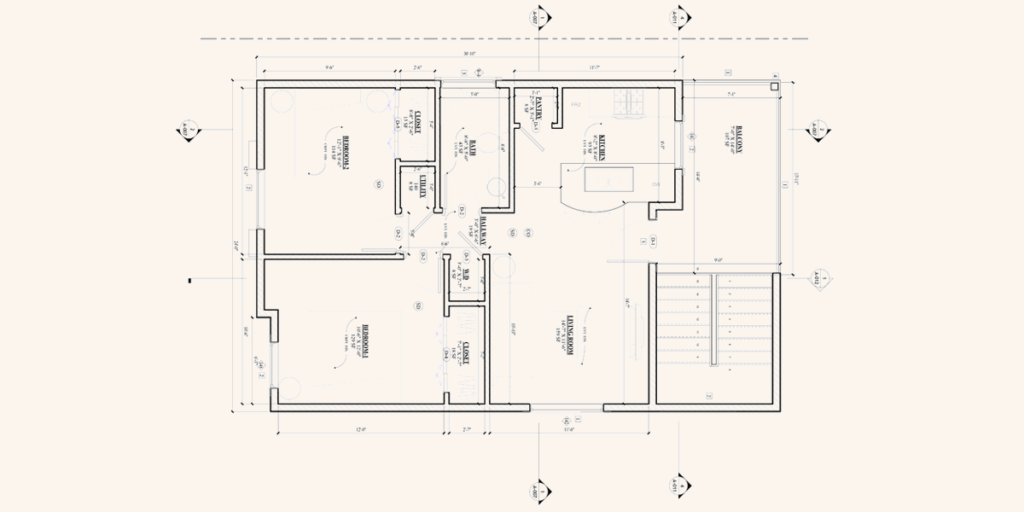
Our project, is a 3,300 sq ft vertical triplex with three 1,100 sq ft units and a total of 6 bedrooms and 6 baths. If you’ll recall from our last article, our first construction bid came back at $190 sq ft. We were shooting for construction costs to come in around $165 sq ft. At the time of writing this, we’ve received a bid from the second builder of $176 per square foot. This amount includes underground work, foundation and a parking pad.
This amount does not include the builders profit margin of 22%.
Land
We’ve had a couple issues come up since we last checked in. We found a utility pole located towards the rear of the property. This leaves our clearance to build at the back of the lot to 32 ft. Unfortunately, the minimum lot width is 50 ft and the side yard requirement is 20% of the lot width or a minimum of 10 ft (CC 3332.25). This prevents us from including offstreet parking for all 3 tenants. While it’s not mission critical, limited off street parking will likely have a negative affect on our appraisal.
Attached, you can view Single-Family Residential Zoning for 1 – 3 unit residential lots in Columbus, Ohio. While zoning regulations will vary by geography, this is an outline of what we comply with in Columbus, Ohio.
We’re fortunate that the builder we’ve choosen to work with has a solid track record and good relationships with the folks at the Department of Building & Zoning. In addition to the lot being re-zoned, it’s been said that well need several different variances to build at this location, if we choose this lot. While these are items the builders team takes care of, we had a more pressing issue with our timeline.
If all goes to plan, our finished project is complete right around Christmas time. We’ve decided to hold off for a few months so our completion date falls in Spring.
One of our favorite components of this project is the neighborhood. Olde Towne East is located in the historic East Side of Columbus, Ohio, making it one of the city’s oldest neighborhoods. With over 1,000 homes, some dating back to the 1830s, the area boasts a diverse architectural landscape. We’re using this time to communicate with the helpful folks at The Olde Towne East Neighborhood Association (OTENA).
While final approval is not available until a proper monthly association meeting, we’ve been able to gather helpful insights by email. We started with a fairly modern exterior asthetic and have adjusted the exterior finishes to match the neighborhood. I’m not sharing my photoshop renderings, but perhaps when we get something presentable from the architect we can share the changes.
We’re also identifying windows & roofing materials that can be pre-approved to ensure the approval process is as seamless as possible.
Cash Flow Summary
As our costs of construction solidify, we’ve been able to assemble our Cash Flow Summary which we’ve included as an attachment. You can see the annualized return to our lenders come in near 10.2% and 17.5% respectively. We’re working with two lenders, one for the primary construction costs and a second to cover the down payment and interest.
Cash Flow Build to Rent Vs Portfolio
One interesting consideration that’s come up during this project came by way of a portfolio of small residential multifamily properties that crossed our desk.
We’ve attached a portion of the Offering Memorandum where you can see a monthly net cash flow of around $6,575. Compare this to our anticipated cash flow of a meager $750 and you can begin to see the relatively low cash on cash return of new construction compared to buying a fully leased portfolio.
While the new construction benefits from low maintenance and low vacancy, it’s also important to factor in additional forms of income that come with real estate to get a complete fiscal picture.
At 4% appreciation, we gain an estimated $38,400 equity annually that’s tax free to pull out at any refinance event. Also, between depriciation and interest payments, we can write off an additional $72,000 in deductions from income. AND, there’s a 15 Year Tax Abatement to incentivise infill developement in the area.
Conclusion
This project has already been christened a labor of love when considering the amount of effort that goes in, cash thats tied up and low cash flow. It’s becoming fairly clear that buying and renovating exsisting structures tends to tie up less cash for a shorter period of time and provide greater cash flow.
That doesn’t factor in benefits like growing a professional relationship with friends we’ve worked in the past, familiarity with the new build process and maybe future opportunities to do some build to rent single family homes in the suburbs.
It’s also nice to be apart of areas that add interest and value to the area and do our part to be a member. So often we appreciate the beauty of craftsmanship that gets passed on today for leaner building practices.